

How to Build a Reliable Toolkit for Home and Auto
Last Updated: November 6, 2026
Quick Summary
Build a reliable toolkit by starting with a written task audit of the jobs you actually do, then buying tools matched to those recurring and seasonal tasks instead of a prepackaged set. Judge each tool with four checks: material and finish, joint and pivot play, handle attachment, and warranty terms.
- The seven essential hand tools are a hammer, screwdriver set, pliers, adjustable wrench, tape measure, utility knife, and level.
- A 3/8-inch socket set is the practical middle ground for home and light auto work.
- A starter tier of the seven hand-tool essentials typically runs $80 to $150 at mid-grade quality.
- If a tool will be used more than a dozen times a year, buy the mid-grade or better version.
- Secure a car kit with a strap or closed box so it does not become a projectile in a sudden stop.
Table of Contents
- How to Create a Toolkit That Matches Your Actual Tasks
- Start with a Task Audit, Not a Shopping List
- The Reliability Test: How to Judge Tool Quality Before You Buy
- Choosing the Essential Hand Tools for a Reliable Toolkit
- Fasteners, Anchors, and Small-Part Organization
- Basic Household Toolkit Checklist for Beginners and Homeowners
- Toolkit Examples for Home, Car, and Remote Work
- Digital Toolkit Examples for the Modern Household
- Budget Tiers, Maintenance, and When to Replace a Tool
- Shop the Blue Point Toolkit Essentials
- Frequently Asked Questions
How to Create a Toolkit That Matches Your Actual Tasks
Most people build a toolkit backwards. They buy a prepackaged set, stuff it in a closet, and discover two years later that half the pieces have never left the case while the one tool they actually needed is missing.
Buyers who start with a task list generally end up with fewer regrets than buyers who start with a big-box bundle. Below, we'll show you exactly how to build a reliable toolkit in stages, from the first screwdriver to the maintenance schedule that keeps everything working.
Start with a Task Audit, Not a Shopping List
A task audit is a written inventory of the jobs you actually perform or expect to perform around your home and car. Spend one week noting every fix, assembly, or adjustment you make. Tightening a cabinet hinge counts. So does swapping a license plate.
Group what you find into three buckets:
- Recurring jobs: hanging shelves, tightening furniture, replacing outlet covers
- Seasonal jobs: storm-window installs, gutter checks, tire pressure changes
- Someday jobs: assembling flat-pack furniture, mounting a TV, basic car maintenance
The recurring and seasonal buckets drive your first purchases. Someday jobs wait. This is the single biggest money-saver in the whole process, and it is the step most guides skip entirely.
The Reliability Test: How to Judge Tool Quality Before You Buy
Tool reliability is the likelihood that a tool performs its job correctly, repeatedly, without failing or damaging the workpiece. Reliability is not the same as brand prestige, and it is not the same as price.
Judge it with four checks you can run before checkout:
- Material and finish: Drop-forged steel with a clean, even finish resists deformation better than cast metal with visible seams.
- Joint and pivot play: Open and close the tool. Any wobble in a pivot or jaw means it will worsen under load.
- Handle attachment: The handle should be molded or mechanically locked to the shank, not glued.
- Warranty terms: A lifetime warranty that covers replacement without a receipt is a stronger signal than a longer warranty buried in fine print.
If you are shopping online and cannot handle the tool first, the FTC's consumer guidance on avoiding counterfeit goods explains how to spot knockoffs before they arrive. Our guide on how to spot and avoid cheap knockoffs when shopping online offers practical tips for judging tool quality before you buy.
Choosing the Essential Hand Tools for a Reliable Toolkit
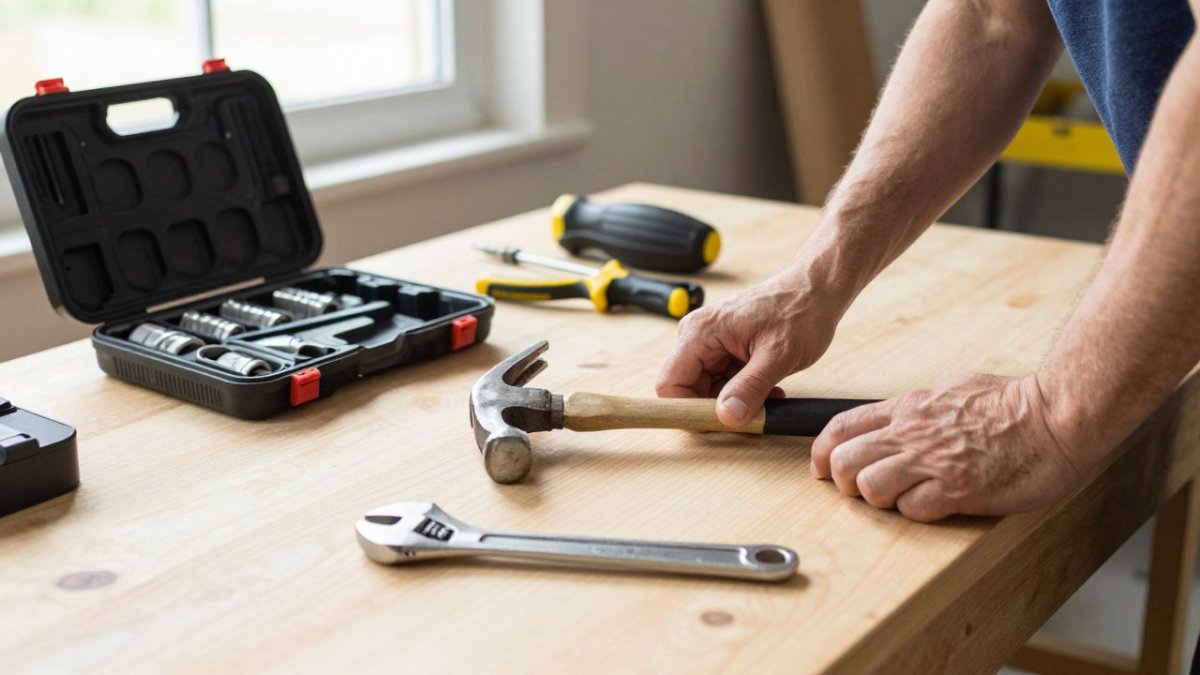
The essential hand tools for a beginner are a hammer, a screwdriver set, pliers, an adjustable wrench, a tape measure, a utility knife, and a level. Those seven items cover the majority of household fixes.
For readers who want a deeper walkthrough of first purchases, our guide on how to choose the best car maintenance tools for beginners covers the automotive side in detail.
Hammers, Screwdrivers, and Pliers: What to Look For
A 16-ounce claw hammer handles most home repairs. Check that the head is wedged securely to the handle, not merely pressed on.
For screwdrivers, buy a set with both Phillips and flathead tips in several sizes rather than one multi-bit driver. Bits wear out, and a set lets you replace the worn one.
Pliers are where cheap kits fail fastest. Look for a needle-nose pair and a slip-joint pair with machined jaws. A common mistake is buying pliers so small that they cannot grip a stubborn bolt head.
Socket Sets, Drive Sizes, and Metric vs Standard
Socket sets are graded by drive size, the square fitting that connects the socket to the ratchet. The three common sizes are 1/4-inch, 3/8-inch, and 1/2-inch. A 3/8-inch set is the practical middle ground for home and light auto work.
You need both metric and standard sockets unless you know your vehicle and appliances are entirely one system. Most modern cars mix the two, and guessing wrong strips a bolt head.
Fasteners, Anchors, and Small-Part Organization
Fastener selection follows the wall type, not the other way around. Drywall needs a toggle anchor or a rated drywall anchor for anything with weight. Masonry needs a sleeve anchor or a hammer-set anchor.
Match the fastener to the load, and respect the weight rating printed on the anchor package.
Organization matters as much as selection. For household items beyond the toolbox, our household essentials collection covers the everyday basics worth keeping stocked.
Basic Household Toolkit Checklist for Beginners and Homeowners
Here is the checklist we would hand a first-time homeowner. Print it and check items off as you acquire them.
- 16 oz claw hammer
- Screwdriver set, Phillips and flathead, multiple sizes
- Needle-nose and slip-joint pliers
- Adjustable wrench
- Tape measure, 25 ft
- Utility knife with spare blades
- Torpedo level
- Stud finder
- 3/8-inch socket set, metric and standard
- Assorted screws, nails, and anchors in labeled containers
- Safety glasses and work gloves
- Small parts organizer
Safety gear belongs on the list, not in a drawer. Eye protection matters every time you strike metal or cut with a knife.
Toolkit Examples for Home, Car, and Remote Work
Three configurations cover most households, and the differences come down to portability, task mix, and safety gear. Map each kit to the jobs it must handle rather than to a generic list.
| Toolkit | Core Contents | Safety Equipment | Best For | Portability |
|---|---|---|---|---|
| Home kit | Full hand tool set, 3/8-inch socket set, anchors, 25 ft tape, torpedo level, stud finder, small parts organizer | Safety glasses, work gloves, dust mask for drilling | Homeowners handling repairs, mounting, and assembly | Stays in one closet or bench; a rolling chest or wall-mounted pegboard works well |
| Car kit | Tire pressure gauge, jumper cables, 3/8-inch socket set, adjustable wrench, screwdrivers, flashlight, tire iron | Work gloves, reflective vest, warning triangle | Commuters and road-trippers | Fits in a trunk box or under-seat bag; keep it secured so it does not become a projectile |
| Remote work kit | Cable organizer, surge protector, small precision driver set, flashlight, tape measure | None beyond basic electrical awareness | Home office and apartment dwellers | Fits in a desk drawer or small tote |
Build the home kit first, then add the car kit as a separate box so you are never stranded without a wrench. For the automotive portion, browse our car care and accessories selection to fill the gaps.
A task-based plan makes the contents concrete. For hanging a shelf, the home kit needs the stud finder, level, drill, screws, and drywall anchors rated for the load.
Portable versus home-based is a real decision, not an afterthought.
Watch out: a car kit left loose in a trunk can slide and strike occupants in a sudden stop; secure it with a strap or store it in a closed box.
Digital Toolkit Examples for the Modern Household
A digital toolkit is the software and accessories that keep a home office running: a surge protector, cable management, a reliable charger, and a backup drive. Treat these with the same task-audit logic. If you never video call, you do not need a ring light.
The reliability test applies here too. Check connector standards, power ratings, and warranty terms before buying. Our guide to essential tech accessories for remote work goes deeper on the specific items worth owning.
Budget Tiers, Maintenance, and When to Replace a Tool
Budget by tier rather than by brand, and anchor each tier to a realistic outlay.
Cost per use is the metric that matters.
Maintenance is simple and mostly ignored. Wipe tools down after use, oil pivot points lightly with a few drops of machine oil, and store them dry.
Run an inspection once a season, and replace a tool when any of these appear:
- Visible cracks in the head, jaw, or handle
- A pivot that no longer holds adjustment
- Rust pitting that changes the surface of a striking face
- A screwdriver tip that cams out of the screw head
- A ratchet that skips teeth or reverses under load
- A utility knife whose blade lock no longer engages
A worn tip damages fasteners, and a damaged fastener costs more to fix than the tool cost to replace.
Shop the Blue Point Toolkit Essentials
Building a reliable toolkit is a project measured in weekends, not a single shopping trip. The challenge is resisting the urge to buy everything at once and instead letting your task audit guide each purchase.
Blue Point makes that easier with a curated selection of quality products and a one-stop shopping experience, so you can find what you need in one place and shop with confidence. Start with the essentials, expand as your task list grows, and replace worn tools before they cost you a repair.
Frequently Asked Questions
What should be included in a reliable toolkit?
A reliable toolkit starts with a hammer, a screwdriver set with multiple bits, pliers, an adjustable wrench, a utility knife, a level, and a tape measure. Add a socket set if you handle car or furniture repairs, plus fasteners, anchors, and a stud finder for wall work. Store everything in labeled containers so small parts stay findable. The exact list depends on your tasks, which is why a short task audit before buying saves money and clutter.
How do you decide which tools belong in a toolkit?
List the repairs you have actually done or expect to do in the next year, then match tools to those tasks. A renter hanging shelves needs a drill, stud finder, level, and drywall anchors. A car owner needs a socket set with the right drive size and both metric and standard sockets. Skip specialized tools until a specific job requires one. This task-based approach keeps the kit lean and every purchase justified.
What is the difference between a physical and digital toolkit?
A physical toolkit holds hand tools, fasteners, and hardware you use for repairs. A digital toolkit holds the software and accessories that keep your home and work running, such as a label maker app, a home inventory spreadsheet, a smart-home hub, and essential tech accessories for remote work. Many households need both. Digital toolkit examples include maintenance reminder apps and digital manuals for appliances, which pair well with a physical kit.
How should you organize and maintain a toolkit?
Sort tools by task or type into labeled containers, and keep fasteners in divided small-parts boxes so screws and anchors do not mix. Wipe tools after use, oil metal parts occasionally, and check handles for cracks. Review the kit twice a year: replace worn screwdriver bits, dull utility knife blades, and missing anchors. A simple maintenance schedule extends tool life and means you are not caught without a working tool mid-repair.
How do you judge tool quality before buying?
Check the material and construction: forged steel beats cast metal for wrenches and sockets, and full-tang handles hold up better on screwdrivers and knives. Look for clear size markings, smooth joints on pliers, and comfortable grips. Read reviews for durability complaints rather than star averages alone. A tool that survives repeated use costs less per use than a cheap one you replace twice, which is the practical definition of reliability.
Can you give me an example of a toolkit for a first apartment?
A first-apartment toolkit might include a 16-ounce hammer, a screwdriver set with Phillips and flathead bits, slip-joint pliers, an adjustable wrench, a tape measure, a level, a utility knife, and a small assortment of screws, nails, and drywall anchors. Add a cordless drill and stud finder for shelving. Store it all in a handled tool bag or a small tool chest so it fits in a closet.
